Product Guides
Custom Ear Tag Numbering: Prevent Duplicate IDs and Packing Mix-Ups
Prepare clear ear tag numbering files, preserve leading zeros and match packing groups to ID ranges before approving a custom livestock tag order.
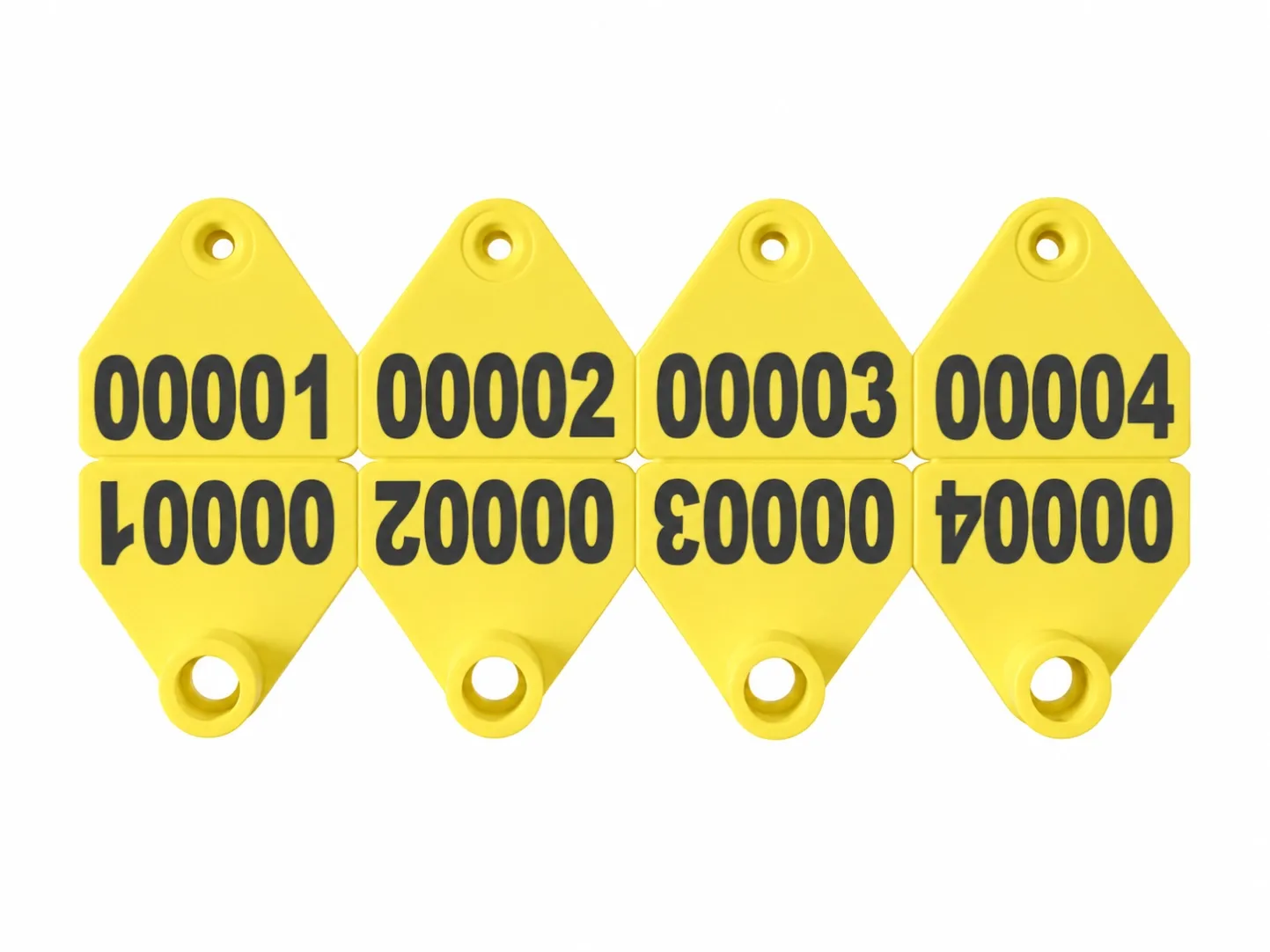
A custom ear tag order can look correct in a product photo and still arrive with an unusable numbering sequence. Missing leading zeros, repeated numbers or mixed packing groups can create extra sorting work before the tags reach a farm or distributor.
Before requesting production, agree on the exact marking file and how the finished tags will be grouped. This guide focuses on printed or engraved visual numbering. Electronic RFID identification requires a separate confirmation of encoding and reader requirements.
1. Define what one order unit contains
State whether your quantity means complete two-piece sets, female panels only or separate male buttons. For a complete set, confirm which component carries the visible number and whether both components need matching marks.
For example, an order for 1,000 numbered sets from 000001 to 001000 should identify the selected female panel, matching male button and required marking on each part. Do not assume that a catalogue image establishes the full set configuration.
2. Keep the numbering file exact
Use one row per required identifier when practical. Include the model combination, tag color, exact visible text, quantity and packing group. Keep logo artwork separate from variable numbering, and label each file with a version and approval date.
- Store identifiers as text so leading zeros remain visible.
- Check the final exported file, not only the spreadsheet display.
- Specify spaces, hyphens, prefixes and letter case exactly.
- Avoid using a photograph as the only source for a long sequence.
A pattern such as FARM-A-0001 to FARM-A-0500 is clearer when supported by the complete approved list. If you provide only a start and end number, confirm the increment, zero padding and any skipped numbers in writing.
3. Check duplicates and gaps before approval
Compare the number of rows with the ordered quantity and review the list for repeated or missing identifiers. Check the full identifier, including its prefix: A-001 and B-001 may be intentional separate IDs, while two identical A-001 entries may be an error.
If a duplicate is intentional, such as matching marks on two components, identify the component in a separate column. This helps distinguish a matched set from an accidental repeat. Keep replacement orders separate and explain whether they must reproduce existing visual IDs.
4. Match the packing plan to the numbering plan
Tell the supplier how the tags will be distributed after arrival. A shipment for several farms or customers may need separate bags or cartons rather than one mixed batch.
- Define the quantity per bag or carton and whether complete sets stay together.
- Assign each packing group a farm, customer or purchase-order reference.
- Request labels showing the relevant model, color, quantity and number range.
- For non-continuous lists, identify the approved list version instead of relying only on a range label.
Confirm packing options and any additional cost before the quotation is finalized. A carton number range alone does not replace checking the actual contents against the approved list.
5. Approve a marking proof and a representative sample
Review a proof showing the exact layout, character size, logo position and numbering format. Include a number with leading zeros and the longest expected text so the layout can be assessed before the full run.
Where samples are arranged, check that the selected tag size provides enough space for the approved design. Confirm the marking method and sample expectations with the supplier; a digital layout does not establish real-world durability or retention performance.
Use the same approved file version for the quotation, marking proof and production instructions. If a file changes, replace the previous approval explicitly and reconfirm any effect on price or timing.
6. Keep visual numbering and RFID encoding separate
A visible serial number should not be assumed to be the electronic identifier stored in an RFID tag. If your project needs a relationship between them, request a mapping list and agree how it will be checked.
Confirm the required tag protocol, exact reader model and destination project requirements separately. Do not treat an ordinary visual numbering file as authorization to assign official electronic identification codes.
Prepare your custom ear tag inquiry
Send IMINID your selected model or reference photos, complete-set quantity, colors, destination country, exact numbering file and preferred packing groups. Add logo artwork and applicator requirements if needed. These details help us review the configuration and prepare a quotation.
Explore the yellow two-piece livestock ear tag set, review the custom order specification checklist, or use our sample approval guide before confirming an order.