One-Piece vs Two-Piece Ear Tags: Compare the Complete Configuration
Compare one-piece and two-piece livestock ear tags by construction, marking area, matching parts and applicator requirements before choosing samples.
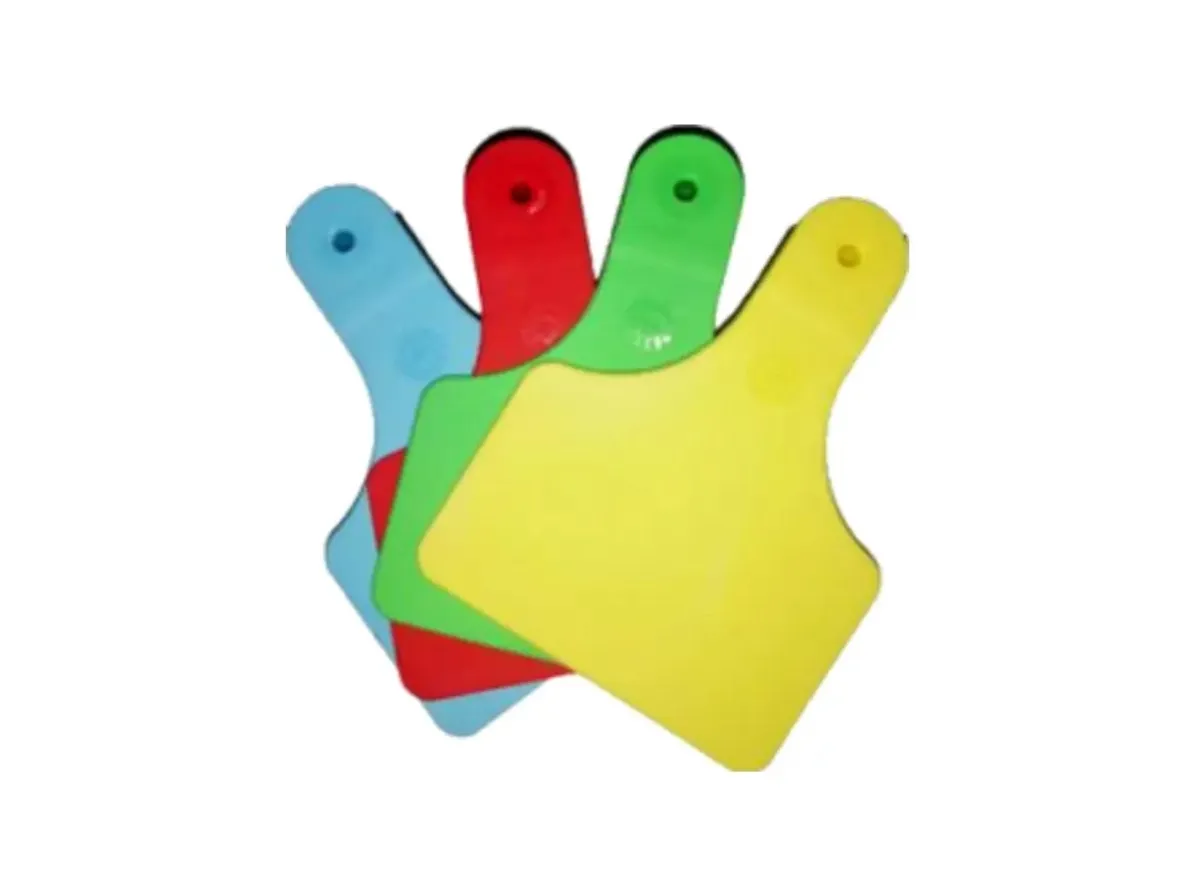
“One-piece” and “two-piece” describe an ear tag's construction. They do not, by themselves, tell a buyer the suitable animal size, whether the tag contains RFID, or which applicator it needs. Comparing the complete configuration helps prevent a quotation for the wrong parts.
What the two descriptions mean
A one-piece model combines its tag sections in one connected component. The closing arrangement depends on the selected design. A two-piece model uses separate mating components, commonly described as the female tag and male button or stud, which are joined during application.
IMINID lists 84 × 62 mm one-piece TPU cattle ear tags and 80 × 60 mm one-piece models. These references illustrate particular catalogue options; their dimensions should not be treated as specifications for every one-piece tag.
Compare marking space and physical profile
Ask for the dimensions of the actual selected model and the area available for printing. A large overall dimension does not necessarily mean that the full surface can accept a logo or a long number. Closing parts, holes, curved areas and the selected marking process may limit the usable layout.
Send the animal type, intended age group and identification purpose. Review the proposed sample with the person responsible for animal care rather than choosing purely by the product name or appearance. A photo of a similar tag is helpful, but it does not establish a suitable fit.
Confirm every part of a two-piece set
For a two-piece order, identify both components on the quotation. Confirm the female panel, male fastener, pin design and any requirement for matching numbers. Do not assume that a loose male button will fit another tag because its colour or outline looks the same.
Also distinguish a complete two-piece set from a project that uses two separate tags on one animal. The number of components, complete tag sets and animals served can be different. Our guide to sets, bags and number ranges provides a way to write the quantity clearly.
Check the applicator for the exact model
Ask which applicator, pin and jaw support are specified for the chosen tag. A tool described as “universal” still needs a compatibility check. One-piece construction does not mean that a model can be applied without the correct tool or instructions.
Confirm the complete sample configuration before purchasing tags and applicators separately. Keep the approved part references with the order, especially if replacement pins or further fasteners may be needed later.
Treat RFID as a separate specification
A tag's one-piece or two-piece structure does not establish its electronic capability. If RFID is needed, specify the protocol, required identification code format and compatibility with the intended equipment. If only visible identification is required, define the marking and colour requirements without assuming an electronic chip is included.
What to include in your comparison request
- Species, age group and intended use.
- Selected model reference and dimensions.
- Complete-set contents and quantity.
- Colour, exact marking text and artwork.
- Applicator reference and sample requirements.
- RFID specification, if applicable, and delivery destination.
IMINID's minimum order quantity is 100 sets. Confirm the set definition and supplied scope for your selected model when reviewing the quotation.
Comparing ear tag designs?
Send your current model or reference photos with the intended animal type and quantity. We can review available configurations before you select a sample.
Compare Ear Tag Options