Pig Ear Tags for Breeding Farms: Material, Size and Numbering Checklist
Choose custom pig ear tags by TPU material, panel size, locking parts, numbering layout, color coding, sample checks and applicator fit before a bulk order.
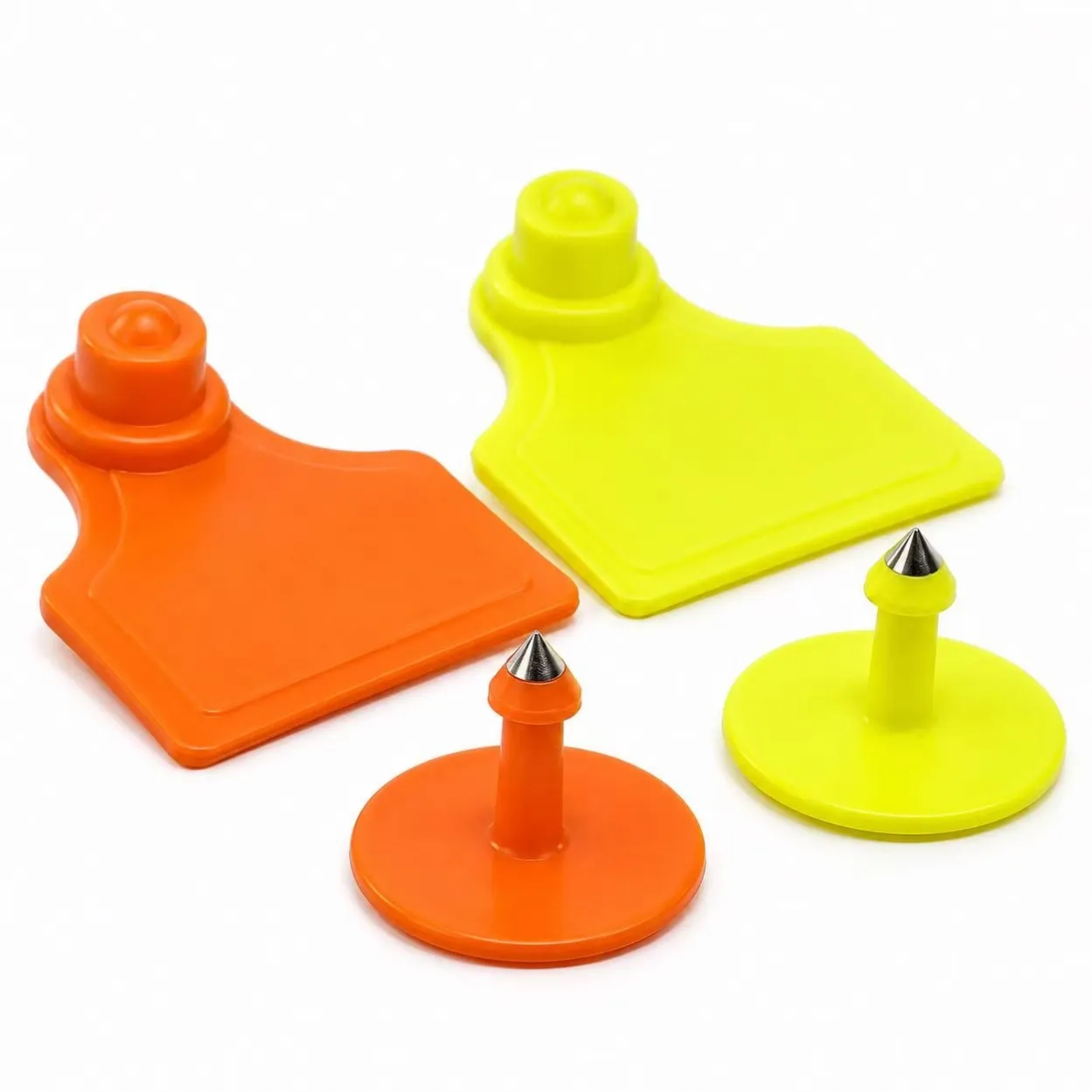
Pig ear tags need to remain readable and securely attached throughout daily farm use. Before requesting a quotation, buyers should confirm the tag material, panel dimensions, male and female components, marking layout, color plan and applicator compatibility. A clear specification reduces repeated artwork changes and helps the supplier prepare a sample that matches the intended breeding or herd-management workflow.
1. Confirm the Tag Material
TPU is commonly selected for visual pig ear tags because it can provide a flexible tag body and a smooth marking surface. Material descriptions alone are not enough for bulk approval. Ask for an actual sample and check flexibility, surface finish, color consistency and the condition of the tag after application. If the tags will be used outdoors, also discuss expected UV exposure and the required service environment.
2. Select a Practical Panel Size
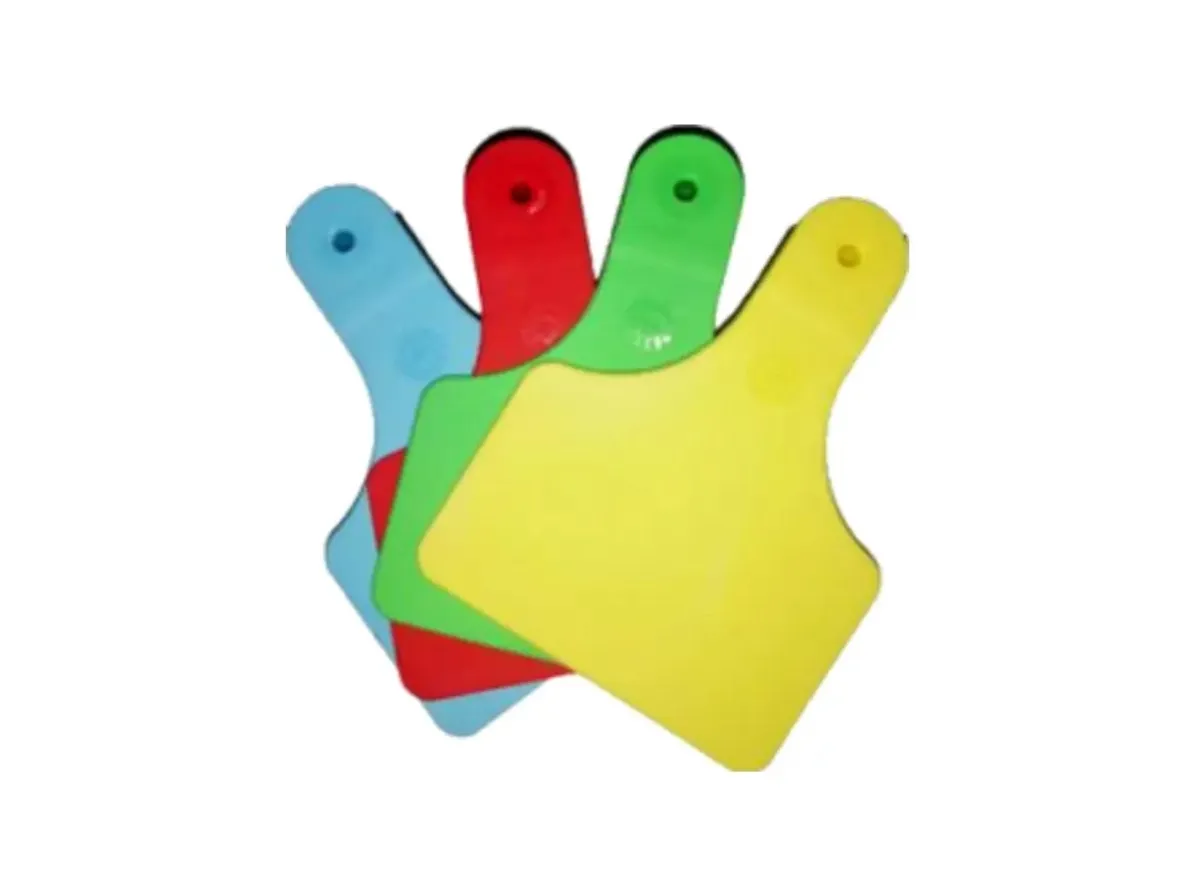
The panel must be large enough for the required information without creating an unnecessarily bulky tag. A breeding farm may need a large sequential number, a short farm code, a logo or two lines of text. A distributor may also need different sizes for piglets and adult animals. Instead of choosing from a catalogue photo alone, confirm the actual width and height and compare them with the planned marking layout.
| Information to print | What to confirm |
|---|---|
| Sequential number | Number range, font size and viewing distance |
| Farm name or code | Exact spelling, line position and capitalization |
| Logo | Vector artwork, minimum line thickness and final placement |
| Barcode or QR code | Required data, code size and physical scan test |
3. Check the Male and Female Components
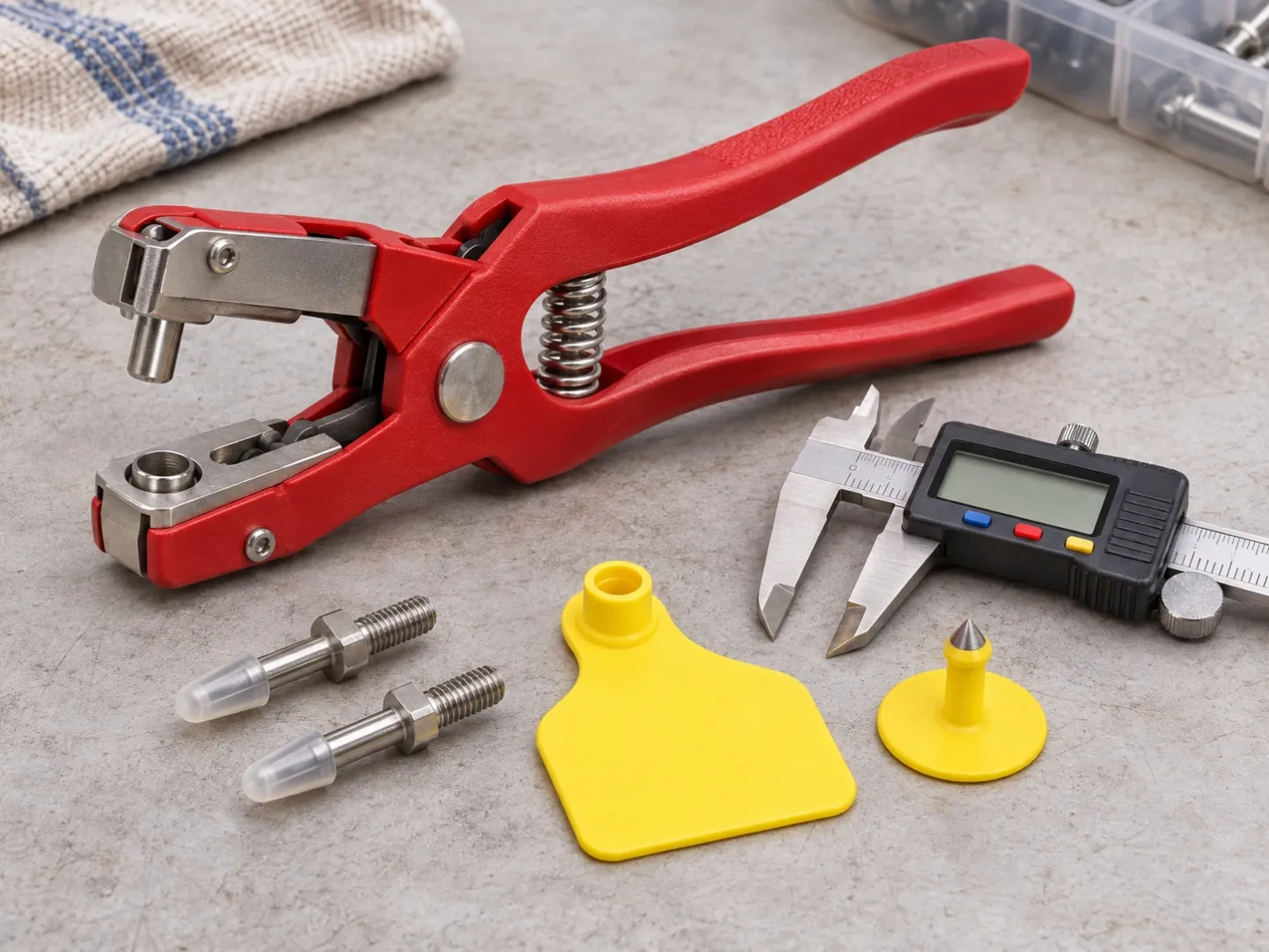
A two-piece pig ear tag is a complete fastening system. The male post, metal tip, receiving opening and female panel must be evaluated together. Do not approve only the visible panel. Confirm which component carries the marking, whether male and female colors must match, how many complete sets are required and whether spare male buttons are needed.
4. Prepare the Numbering File Clearly
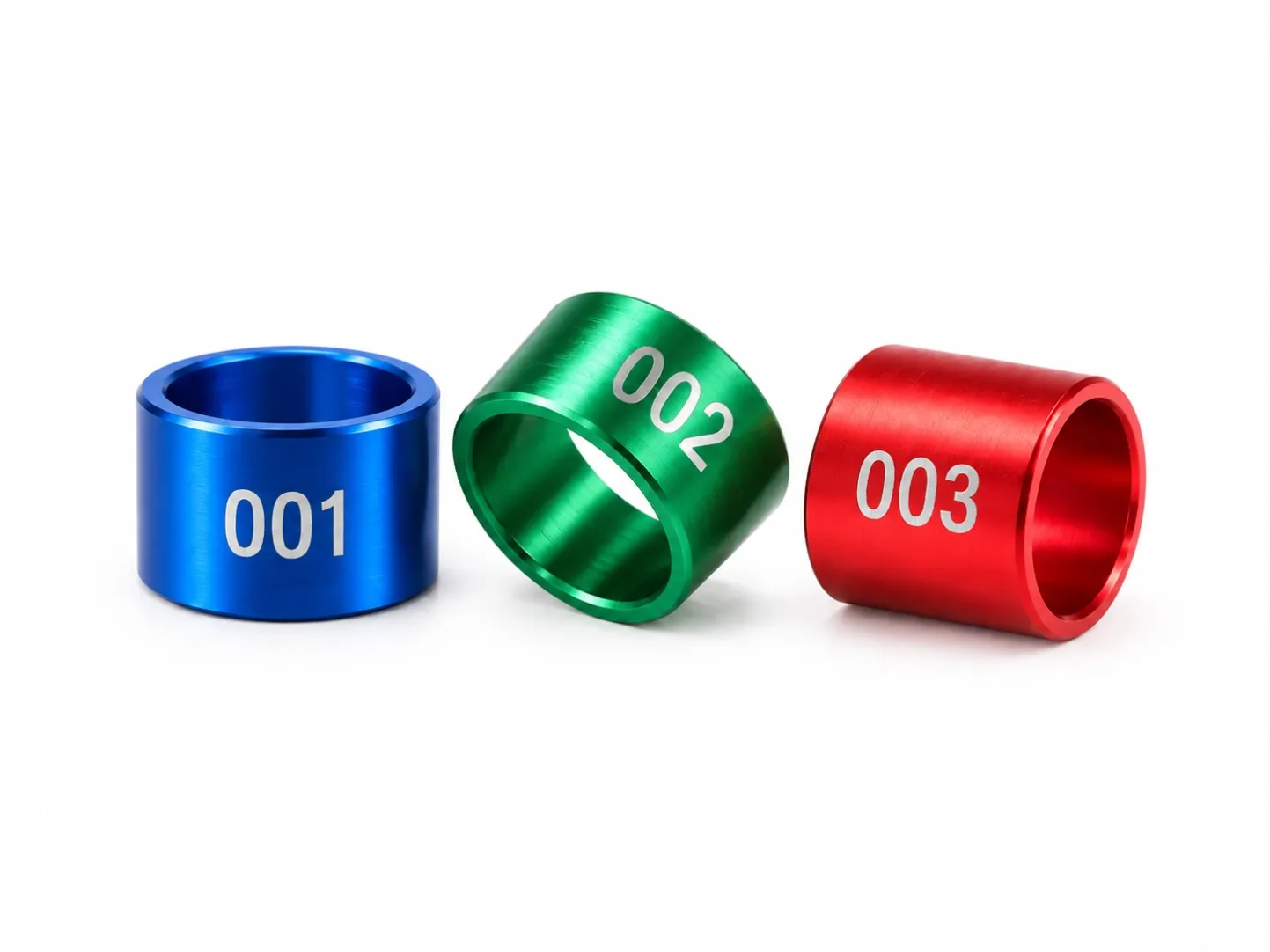
Custom numbering errors are easier to prevent before production. Provide the number list in a spreadsheet and state whether every number appears once or must be repeated on matching tags. Keep leading zeros in the file, for example 0001–2000, and state whether quantities refer to pieces, pairs or complete sets.
- Use one row for each required number or complete set.
- Identify duplicate-number requirements in a separate column.
- Separate different colors or animal groups into clear batches.
- Approve the final artwork before bulk marking begins.
- Ask the supplier to check the first and last numbers in every packing group.
5. Use Colors for Farm Management
Tag colors can help farms separate breeding groups, age groups, locations or management stages. Send a color-quantity table with the order instead of describing the plan only in a message. For repeat orders, keep the approved color reference, tag model and marking file together so the supplier can compare the new order with the previous batch.
6. Test the Applicator and Sample Set
Applicator pins and jaw support can vary between tag systems. Before a bulk purchase, test a complete sample set with the intended applicator. Check alignment, insertion, locking and the condition of the post after application. If an existing applicator will be used, send clear photos of the tool, pin and jaw area or provide its model reference.
Information to Send for a Quotation
- Animal type and preferred tag size
- Quantity in pieces or complete sets
- Required colors and quantities for each color
- Sequential number range and repeat rules
- Logo, text, barcode or QR-code artwork
- Applicator requirement or current tool reference
- Destination country and packing requirements
If the size is uncertain, send a reference photo and the required marking content. IMINID can help compare suitable visual ear tag options before sample production. Browse our livestock ear tags or review the ear tag applicator compatibility checklist.
Request a Quote for Custom Pig Ear Tags
Send the required tag size, quantity, color plan, numbering file and destination country. If the size is uncertain, include a reference photo and the marking content.
Not sure which pig ear tag fits your project? Send a reference photo and your marking requirements, and ask us to help confirm the details.