RFID Ear Tags for Sheep and Goats: Compare Size, Weight and Matching Parts
Compare RFID ear tag dimensions, complete-set weight, locking parts and printed identification for sheep and goats before selecting samples or a bulk order.
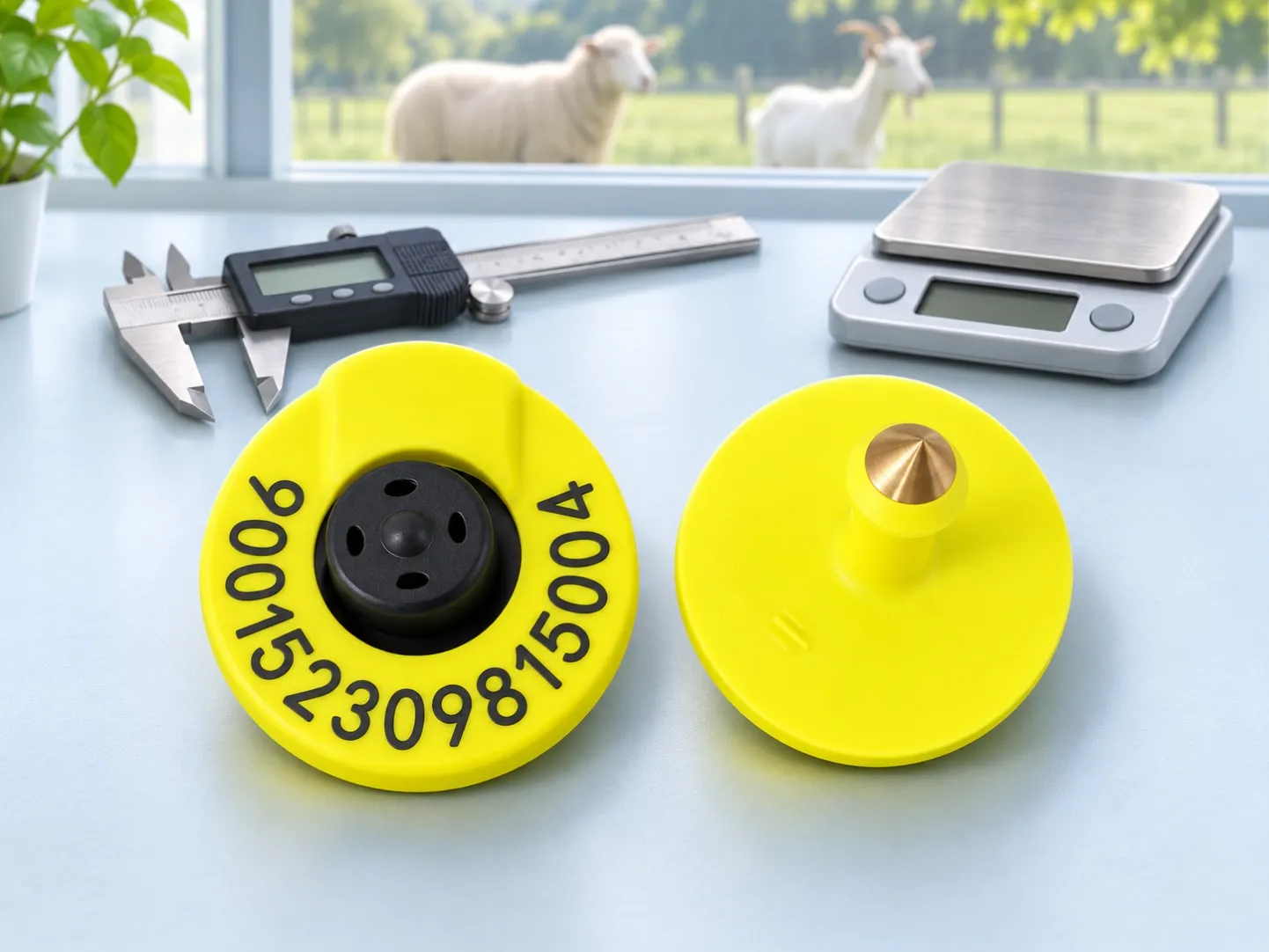
Choosing an RFID ear tag for sheep or goats involves more than selecting a frequency. Buyers also need to compare the physical tag, the matching fastener and the identification information supplied with each set. A compact appearance in a catalogue is not enough to confirm fit for a particular flock or age group.
Define the animal group and purpose first
Specify whether the tags are intended for adult sheep, adult goats, lambs or kids. Include the breed or approximate size where relevant and explain whether the project is for farm records, breeding management or a documented identification programme. Ask for the selected model's intended applications rather than assuming every small round tag is interchangeable.
A product's RFID protocol does not establish approval for a particular official identification programme. Where programme approval is required, confirm the exact device and code requirements before ordering.
Compare the complete tag set, not only the front diameter
Ask for the female tag diameter or panel dimensions, housing thickness, male button dimensions and the weight of the complete matched set. If a weight is quoted, check whether it includes both components. The space between the closed components and the fastening design are also useful points for review with the supplier.
There is no single dimension or weight that this guide can recommend for every sheep or goat. Compare the proposed model with the intended animal group and obtain appropriate fitting guidance. A larger marking surface may be useful for visual records, while a different design may be preferred for a smaller animal; these choices need a model-specific review.
Confirm the locking components and applicator
Order the electronic female tag with the specified matching male component. Ask whether the applicator requires a particular pin, holder or insert. Similar colours and shapes do not establish that parts from different models can be mixed.
Record the agreed combination in the sample specification. Installation should follow the instructions for the chosen tag and tool. Avoid improvised component substitutions or unverified claims that one applicator suits every electronic tag.
Plan the electronic ID and visible number
Clarify the required electronic protocol and ID format, then specify the visible number or farm-management code separately. A printed management number is not automatically the full electronic ID. If the two are meant to correspond, request a mapping list and agree the relationship before custom marking.
For paired identification arrangements, state how many tags and electronic components are required per animal. Distinguish the number of animals from the number of individual pieces or complete sets so quotation and packing quantities remain clear.
Use a written sample review checklist
- Selected model and intended sheep or goat group.
- Female and male dimensions, complete-set weight and matching parts.
- Confirmed applicator and any required insert.
- Electronic ID format and its relationship to visible marking.
- Colours, quantity, packing groups and sample acceptance points.
Use the same checklist when approving the bulk specification. Electronic operation and physical construction are separate checks; neither a product photo nor one successful scan verifies all order requirements.
Compare the round FDX-B RFID ear tag option and the wider RFID identification range. Read about matching pairs and order quantities when preparing your request.
Planning a sheep or goat RFID ear tag order?
Send the animal group, required protocol or programme specification, desired tag size, visible numbering and quantity. IMINID can review available options and confirm sample details before a bulk quotation.
Request Product Matching & a Quote