Product Guides
Sheep & Goat Ear Tag Orders: Clarify Matching Pairs and Quantities
Prepare a sheep or goat ear tag quotation with clear quantities, matching-number requirements, tag components, sample checks and packing instructions.
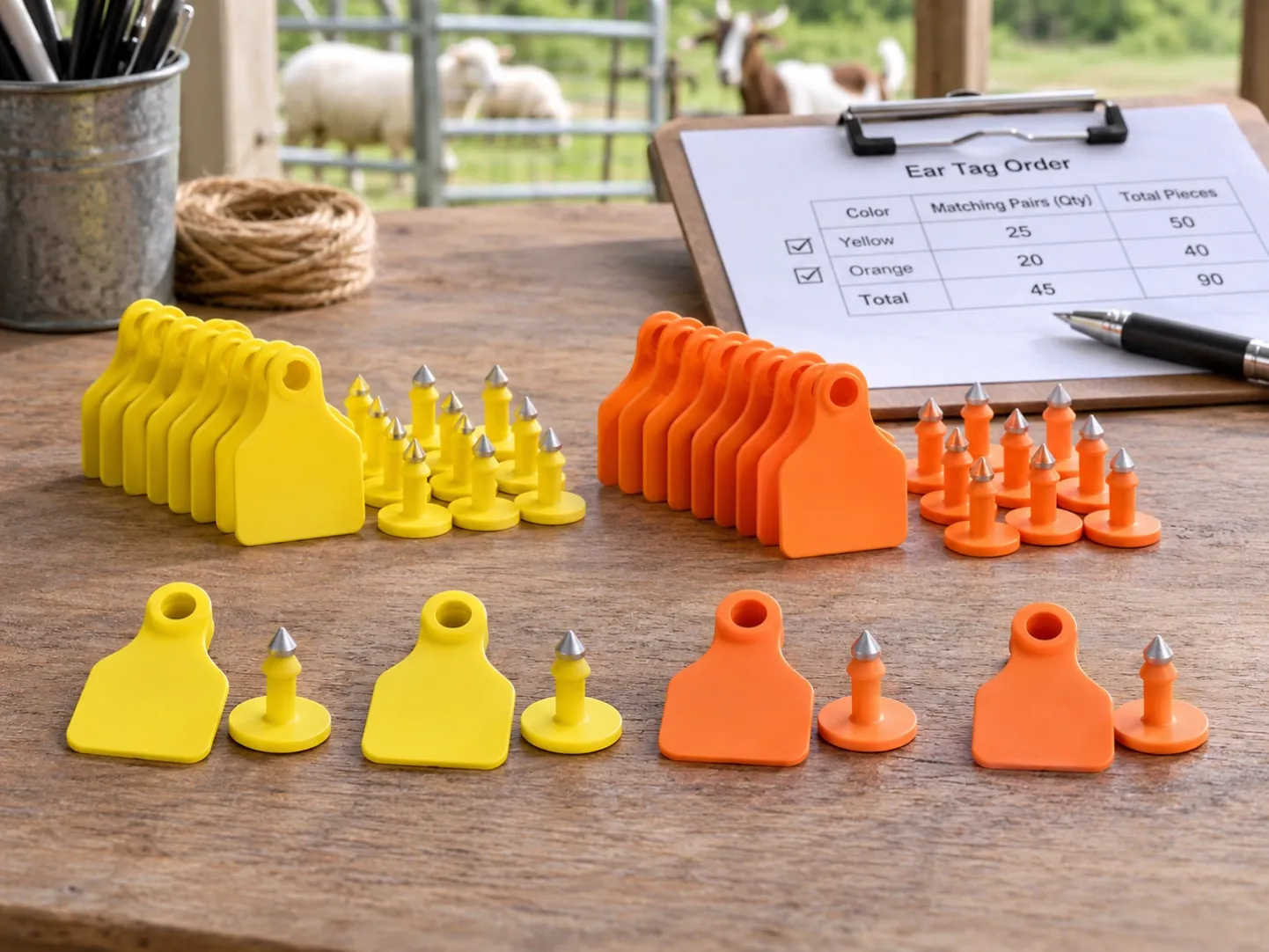
A request for “matching pairs” can describe two different purchases: two complete ear tags carrying the same visible number, or the male and female components that assemble into one ear tag. A clear quotation separates the number of animals, complete tags and individual components before pricing begins.
This guide helps buyers prepare custom visual ear tag requests for sheep and goats. It is not a specification for an approved official identification system. Confirm local programme requirements separately when sourcing official identification.
1. Define what one pair contains
Describe the required finished arrangement in words and, where possible, add a photograph or drawing. If each animal needs two complete numbered tags, say so explicitly. If you mean one female panel plus its matching male fastener, call that a complete tag assembly and identify both components.
Avoid relying on “pieces,” “sets” or “pairs” alone. Ask the supplier to repeat the agreed unit definition in the quotation, sample confirmation and packing list. Depending on the design, a complete ear tag may use two components or a different construction.
2. Reconcile animals, complete tags and components
For a planning example, 150 animals with two complete visual tags per animal require 300 complete tags. If the selected design uses one female panel and one male fastener per complete tag, that means 300 female panels plus 300 male fasteners: 600 individual components.
The two complete tags assigned to each animal would share the agreed visible number. These figures are an order-planning example, not a recommendation about the number or type of tags required by an identification programme.
Request separate quotation lines for complete tag assemblies, spare components and applicators. This makes offers easier to compare and helps prevent a low price for one component being mistaken for a complete tag price.
3. Specify the visible number and its repetition
Supply the exact numbering file or range, preserving leading zeros. State how many complete tags should carry each number and which surfaces receive the marking. Identify any different text or layout required on the two tags.
For the example above, codes DEMO-001 through DEMO-150, each used on two complete tags, produce 300 marked tags. Add the intended color, model and packing group for each line. Keep intentional same-number pairs distinct from accidental duplicate IDs elsewhere in the order.
4. Confirm the model before promising a specification
Identify the intended animal species and age group, panel dimensions, fastening parts and reference model. Ask for confirmation of the material, flexibility, color, marking method and compatible applicator for that combination. A product photograph alone does not establish dimensions, suitability or performance.
If UV resistance, marking durability or a particular locking design matters to your application, state the requirement and ask what supporting information or sample checks are available. Treat these as requirements to review until the selected product has been confirmed.
Browse the livestock ear tag range for reference models, then confirm suitability for sheep or goats rather than selecting by color alone. The ear tag catalogue guide explains model and component references.
5. Make the sample demonstrate the proposed order
Ask whether a stock reference sample or a custom-marked sample is available, and confirm charges and delivery terms. Define what the sample needs to show: both components, agreed dimensions, numbering layout, intended repetition and packing labels.
Check the proposed applicator against the actual fastening system. Review legibility and layout against the approved marking file. Record unresolved points before approving the bulk specification; a stock sample without your markings does not confirm your final artwork.
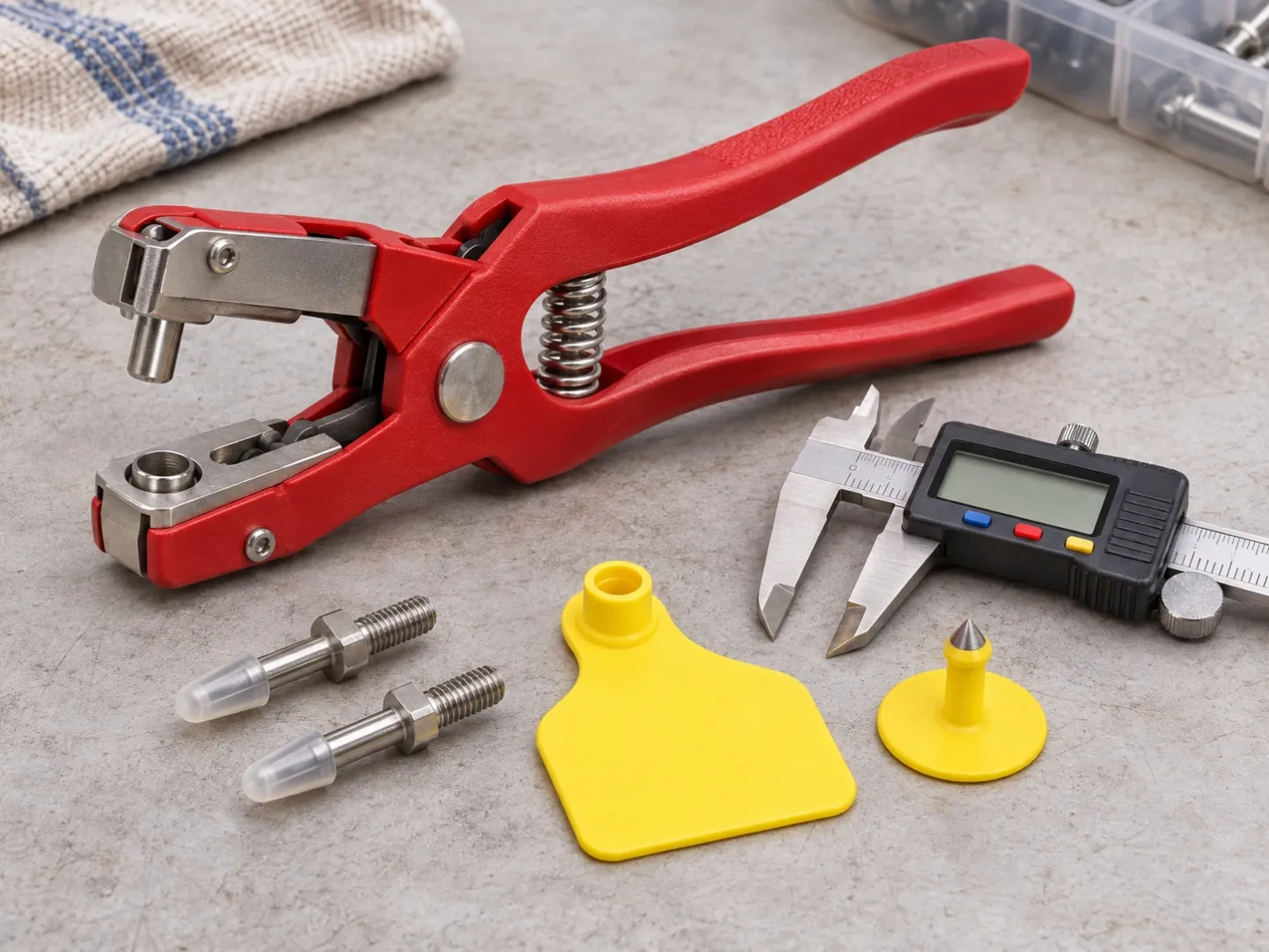
Our sample approval checklist helps record the approved version. The applicator compatibility guide covers component photographs and tool references.
6. Keep matching numbers together in the packing plan
State whether same-number complete tags should be bagged together or grouped in labelled number ranges. Specify the count and unit per bag, label information and carton groups. Reconcile the packing totals with the marking file and quotation.
For delivery pricing, provide the destination country and postal code, requested delivery basis and sample or bulk quantity. Ask the quotation to identify the goods, customization, packing and shipping charges, plus the scope of any duties or taxes included. Confirm minimum order quantity and lead time for the selected specification.
Copyable Sheep or Goat Ear Tag Quotation Request
Please quote visual ear tags for [species and age group]. We have [number] animals and require [number] complete tags per animal. By “matching pairs” we mean [describe the finished arrangement]. Our reference model or dimensions are [details]. Use numbering file [revision], with each visible number on [number] complete tags. Colors, additional text and marking surfaces are [details]. Please confirm included components, compatible applicator, sample arrangements, packing, minimum order quantity, lead time and delivery terms to [country and postal code].
Attach a reference photograph and the numbering file if available. Ask IMINID to review the unit definition and proposed model before confirming a bulk order.