Product Guides
Why Similar-Looking Ear Tags Have Different Prices
Compare ear tag quotations by material, tag parts, marking, quality checks and delivery terms. Learn what to verify before choosing a wholesale supplier.
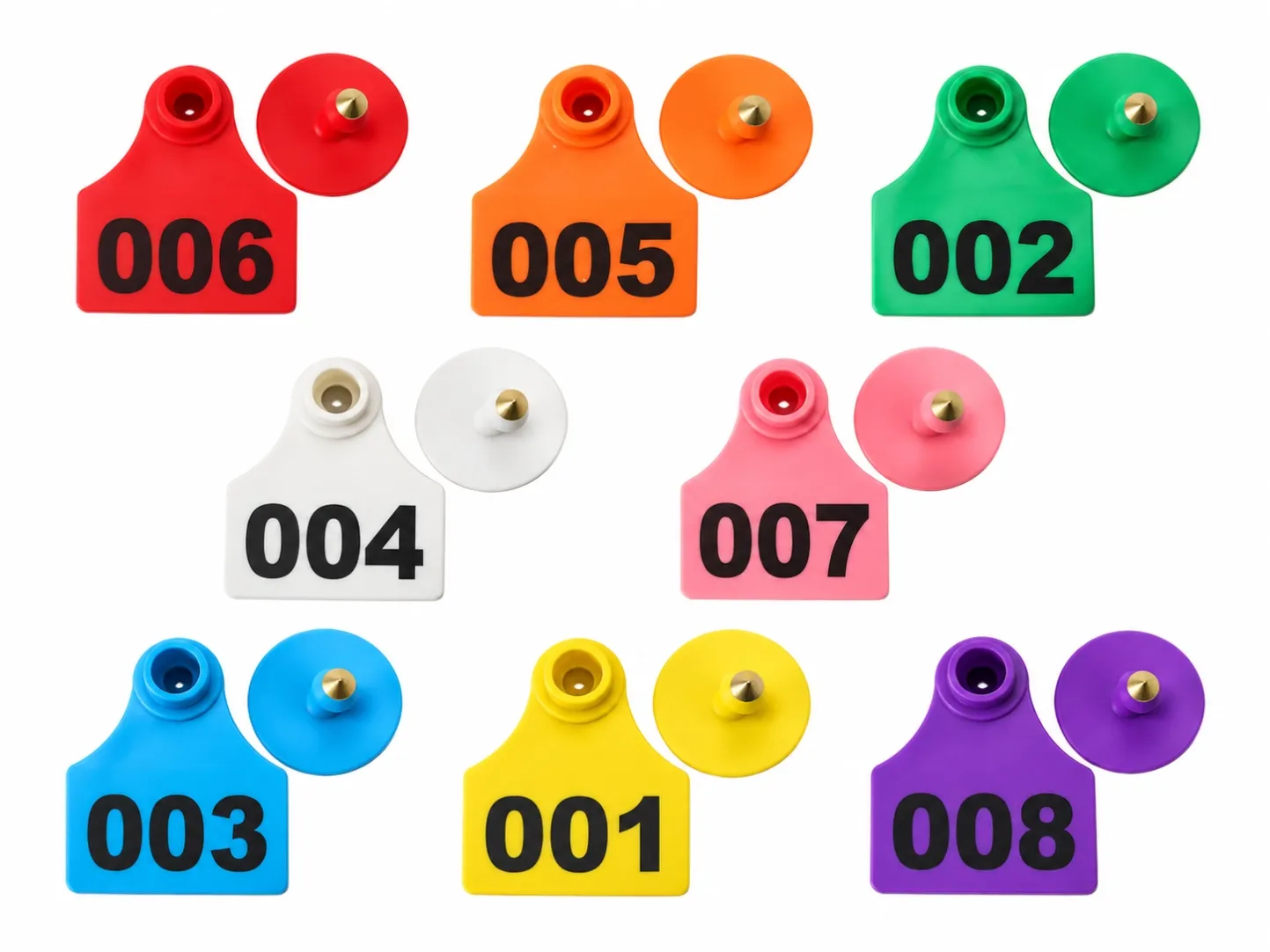
Two suppliers may show ear tags with the same shape and color, yet quote different prices. A catalogue photo rarely tells you whether the material specification, matching components, marking and order terms are equivalent. Before treating the lower offer as a saving, establish what each supplier is actually providing.
For agricultural distributors and livestock equipment importers, a useful comparison starts with a written specification and representative samples. A higher price alone does not prove better quality, and a lower price alone does not establish that a product is unsuitable.
A similar shape does not establish the same material
Ask each supplier to identify the material used for the tag body and fastening components. If both offers say TPU, request the available grade information, intended application and evidence for any claimed weather or temperature resistance. The material name alone is not a complete performance specification.
Compare sample flexibility, surface finish, thickness and weight using the same method. Differences are worth investigating, but these observations cannot establish service life by themselves. Avoid assuming that a heavier, softer or brighter tag is automatically the better option. Ask what the supplier can document and agree on the sample that bulk production should match.
Compare the complete fastening system
Check whether the quoted item includes a female tag and a matching male button, or only one replacement component. Confirm the dimensions of both pieces and the pin construction. Offers described as a price per piece and a price per pair can appear different even before material quality is considered.
The locking connection and installation tool also matter. Similar-looking parts should not be assumed interchangeable. Request a sample fit check with the intended applicator and confirm any replacement needle requirements. Ourear tag applicator compatibility checklist
explains the information to prepare.
Marking can change what is included in the quote
A blank tag, a tag with a simple serial number and a tag with a logo plus a barcode are different order specifications. Ask whether marking is included, which sides will be marked and whether artwork preparation or a special numbering sequence is quoted separately.
For numbered products, approve the font size, contrast, layout and exact data on a sample. Confirm leading zeros, prefixes and the way sequences are divided by color or packing group. Buyers can review ournumbered livestock ear tags with matching male buttonsas a starting point for this discussion. Marking options remain subject to the selected model.
Ask what quality checks support the offer
Request the inspection criteria and available test evidence rather than relying on descriptions such as premium or export quality. Relevant questions include how dimensions and marking are checked, how incorrect numbering is handled and how the approved sample is linked to the production order.
Independent testing illustrates why appearance is only one part of evaluation: DLG’s published FlexoPlus D/D report assesses dimensions, material characteristics, readability and durability, among other criteria. This is a third-party product example, not a certification claim for IMINID products. Any certificate or test report offered with a quotation should be checked against the exact model and the scope shown in that document.
Separate visual identification from electronic identification
A printed number does not establish that an ear tag contains an RFID transponder. If electronic identification is required, compare the electronic specification and reader compatibility separately from the visible shape. Ask for the required protocol, encoded data and a sample reading test using the buyer’s equipment.
Keep visual-tag and electronic-tag quotations in separate comparisons. A visual product photo cannot confirm electronic performance or approval for a particular identification program. Confirm the selected product’s documentation and destination requirements before ordering.
Put quantity, packing and delivery on the same basis
Compare the same model quantities, colors and customization requirements. Ask whether mixed colors, separate number sequences, individual packing, carton labels or spare parts change the quotation. Record which items are included and which are charged separately.
Keep product price and delivery charges visible. Confirm the currency, named delivery term and place, freight scope, payment terms and quotation validity. If an offer includes delivery, check the stated treatment of duties, taxes and destination charges instead of assuming that every delivered price covers the same costs.
How to request a useful comparison from IMINID
Send the supplier model or reference photo, animal application, dimensions, complete-pair quantity, colors, marking file and destination country. Include any applicator requirements and the specific differences you want us to review. You do not need to disclose another supplier’s confidential cost breakdown to explain your requirements.
For a model-based enquiry, start with ourMK2006+GY1001 cattle ear tagor browselivestock ear tags. Ourcustom order specification checklistcan help you put the request together. IMINID coordinates product selection, sample confirmation and order details with manufacturing partners.
Request an Ear Tag Quotation
Tell us which ear tag you need, the complete-pair quantity, customization and destination. We will review the selected specification before quoting.
Technical reference:DLG test report overview — FlexoPlus D/D, accessed 21 October 2026. Referenced for evaluation criteria only.